
Population
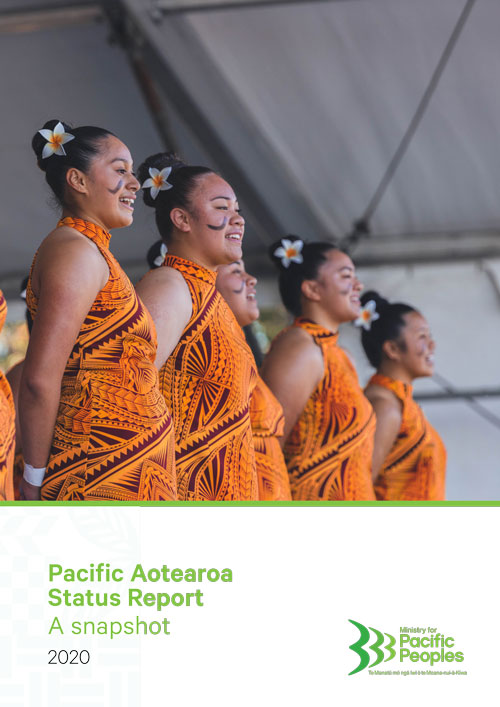
Refer to this report by the Ministry of Pacific Peoples for an in-depth, insightful analysis of the 2018 Census
Socio-Economic
In a recent report, the Ministry of Pacific Peoples (MPP) identified four key characteristics of Pacific population of New Zealand: it is young, growing, diverse and culturally rich (MPP, 2020, pp 10-40). The Pacific population is very youthful with a median of 23.4 years (compared with 41.4 years for the European-heritage population).
It has one of the highest growth rates (it grew by 29% between Census 2011 and Census 2018), attributable to natural increase rather than immigration. In 2006, the Pacific population was 6.9% of New Zealand’s total population. By Census 2018, it was 8.1%, with 381,642 people. It is estimated to be more than 440,000 by 2025, and at least 530,000 by 2038 (MPP, 2020, p 10).
The Pacific population is diverse in terms of cultural or ethnic identity, birthplace, settlement histories, and regional distribution within New Zealand. It includes people who identify with one or more of seventeen cultural groups, the main groups (in terms of numbers) being: Samoan, Cook Island, Tongan, Niuean, Fijian, Tokelau, Tuvalu, I-Kiribati and Rotuman.
66% of Pacific peoples were born and raised in New Zealand; 32% in a Pacific nation, and 2% who were born elsewhere (MMP, 2020, p.14). Some groups have a settlement history of more than seventy years, with significant immigration peaks in the late 50s to mid-1970s (e.g. Samoan), whilst others have more recent histories (e.g. Tuvalu, most of whom have arrived since the 1990s).
The Auckland region hosts 64% of the Pacific population; 11% live in the Wellington region; with 5% in the Waikato and Canterbury regions, respectively (MMP, 2020, p 12).
The Pacific population is culturally rich. This wealth includes languages and language maintenance, a multiplicity of ethnicities, and religious affiliation. It is evident that the cultural wealth of Pacific peoples is considered by many government agencies to be integral to developing appropriate, contextualised services for Pacific peoples in health, education, and social development.
Samu, Mara & Siteine (2008) have argued that, for Pasifika peoples, the dominant influences on education policies are their demographic and socio-economic location and New Zealand’s knowledge economy discourse.
Critiquing policies requires an appreciation of the wider social, historical, economic and political context in which they are produced.