Introducing Kakala as a Pacific research methodology (PRM)
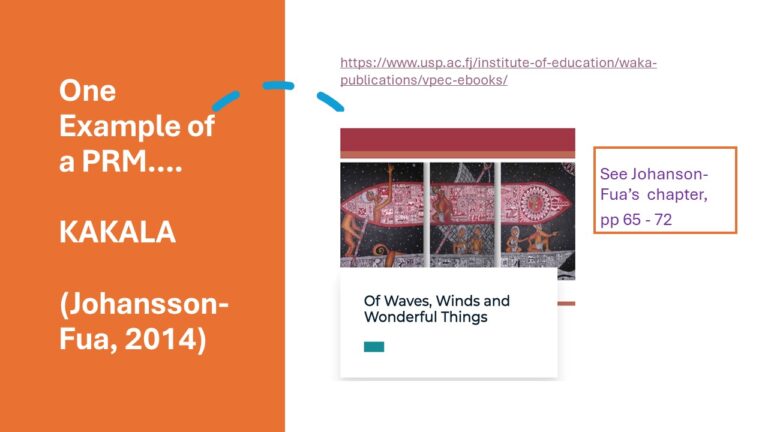
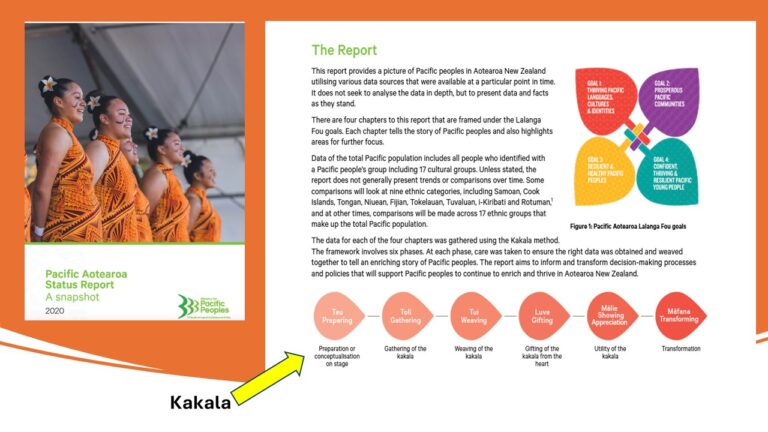
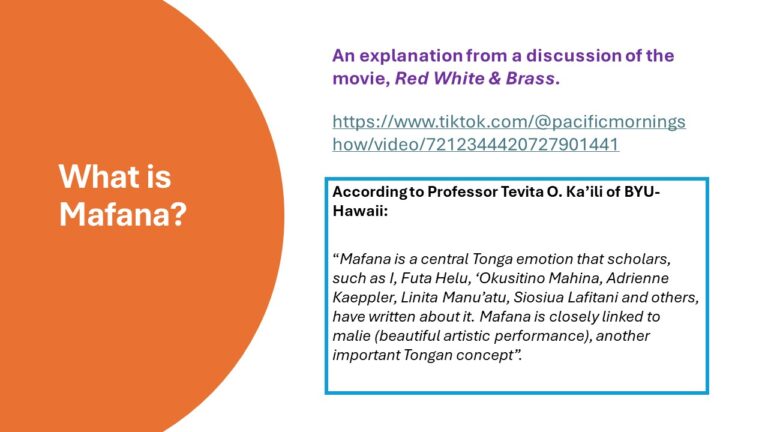
One prominent example of a Pacific metaphor, reconceptualised as a PRM, is the Tongan kakala (garland), developed and theorised as a PRM by prolific Tongan academic and scholar Professor Konai Helu-Thaman in 1992. The weaving of flowers into a garland (kakala) involved a three key processes: toli, the collection of material required to make kakala; tui, weaving of kakala; and luva, the gifting of kakala. The kakala framework was then expanded later by Johnansson-Fua and others from 2014; it now incorporates six phases including: teu, early preparation; malie, the appreciation of the kakala; and māfana , where transformation and sustainability of that transformation can be observed. (Baice & Samu, 2020, p. 142).